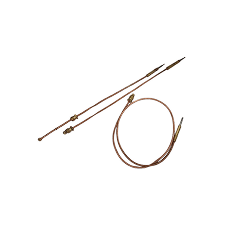
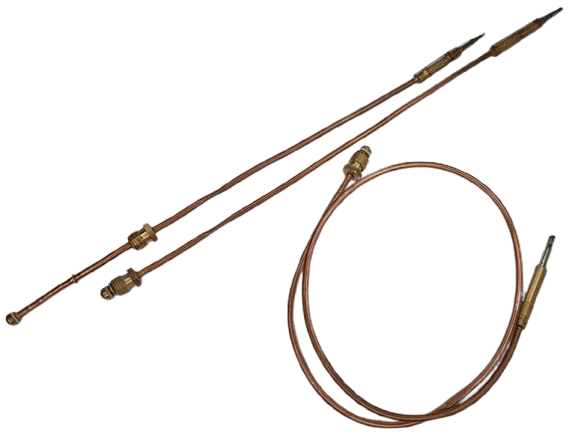
A thermocouple is a small but fundamental part of many gas-powered appliances, such as water heaters, and stoves. It detects temperature changes and controls the flow of gas based on whether a flame is present. This mechanism prevents gas leaks, protecting both the appliance and the home
When two different metals are joined together and exposed to a temperature difference, they produce a small electric current. In appliances, this current keeps the gas valve open while the flame is active. If the flame goes out, the thermocouple cools, cutting off the current and automatically closing the gas valve to prevent leaks.
INSTALLATION :
The pressure applied to the thermocouple nut in connection with the magnet should be between 3 and 4.5 Nm
The connection must be free of dust, grease, oil and other elements that will delay the electrical current
Tube thermocouples (conventional) should not be bent with a radius of less than 20 mm. Wire thermocouples (thermal sensors) should not be bent with a radius of 5 mm. avoided during installation
Technical Data :
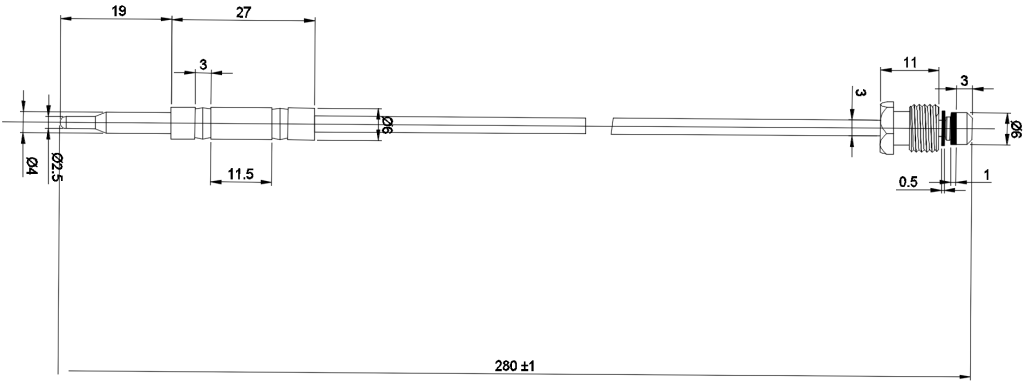
length: 280mm
Max T head: 750°c
Max T conductor: 250°c
electromotive force (E.M.F) in open circuit 650°c: ~30mv
electromotive force (E.M.F) in closed circuit 650°c: 17±1mv
Electrical resistance: 21mΩ±10%
Dimensional drawing
GCP Catalogue
For more information about our products, download the catalogue